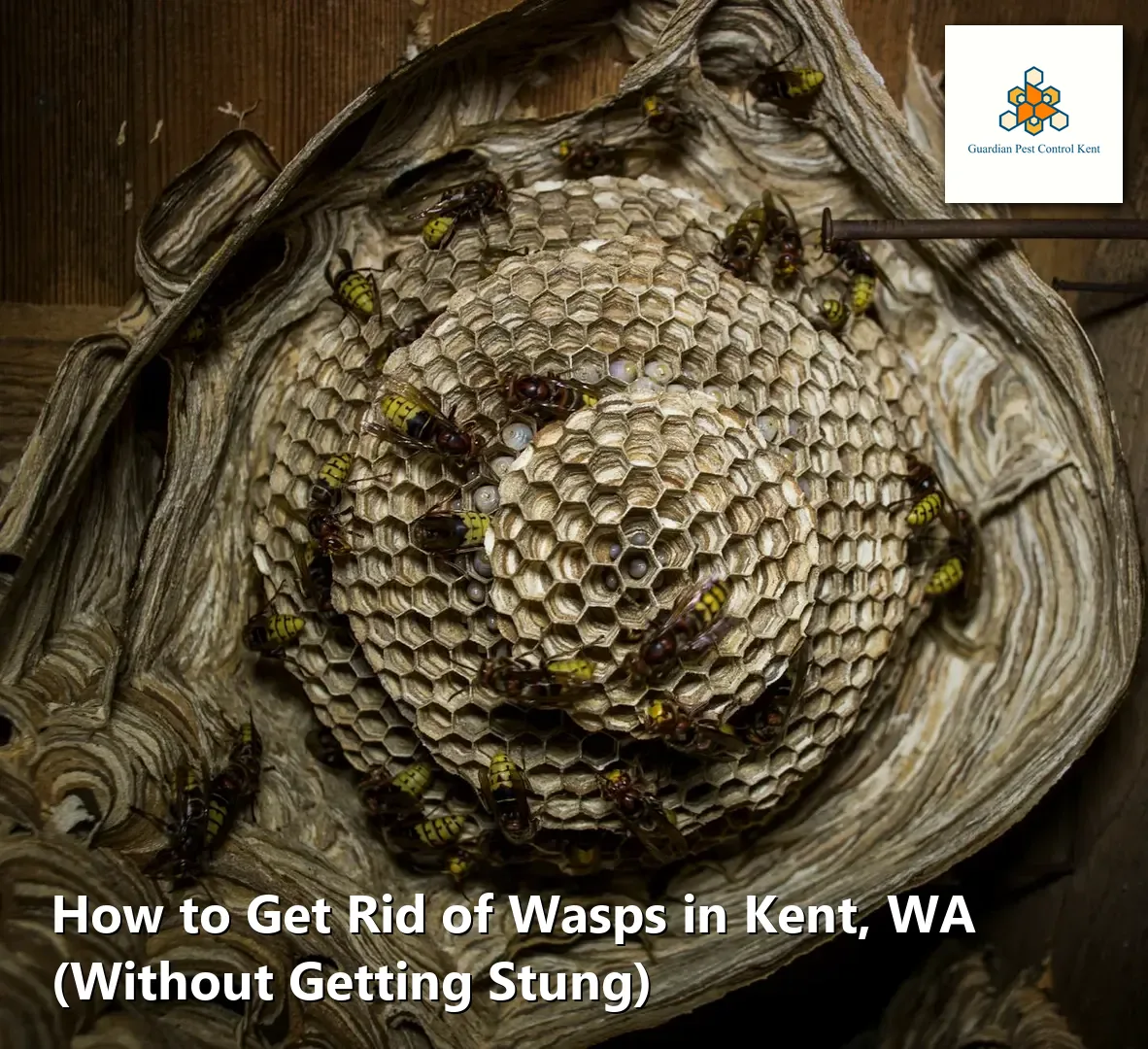
This guide explains how to identify the species you are dealing with, what you can safely treat without professional equipment, and when calling a WSDA-licensed specialist is the correct decision.
Key Takeaways
- Treat wasp nests at dusk or dawn - never during the day when colony defence is at maximum.
- Yellow jacket ground nests and wall void colonies are not safe for DIY treatment with standard aerosols.
- Nests larger than a softball contain enough workers to cause hospitalisation from multiple stings.
- A June treatment of a small nest prevents a September emergency - timing matters more than product choice.
- Removing a dead nest in autumn prevents the same location from being recolonised the following spring.
- Never use a ladder near an active nest - a fall risk combines with an sting risk.
- WSDA-licensed specialists use full protective equipment and targeted non-aerosol treatments for enclosed nests.
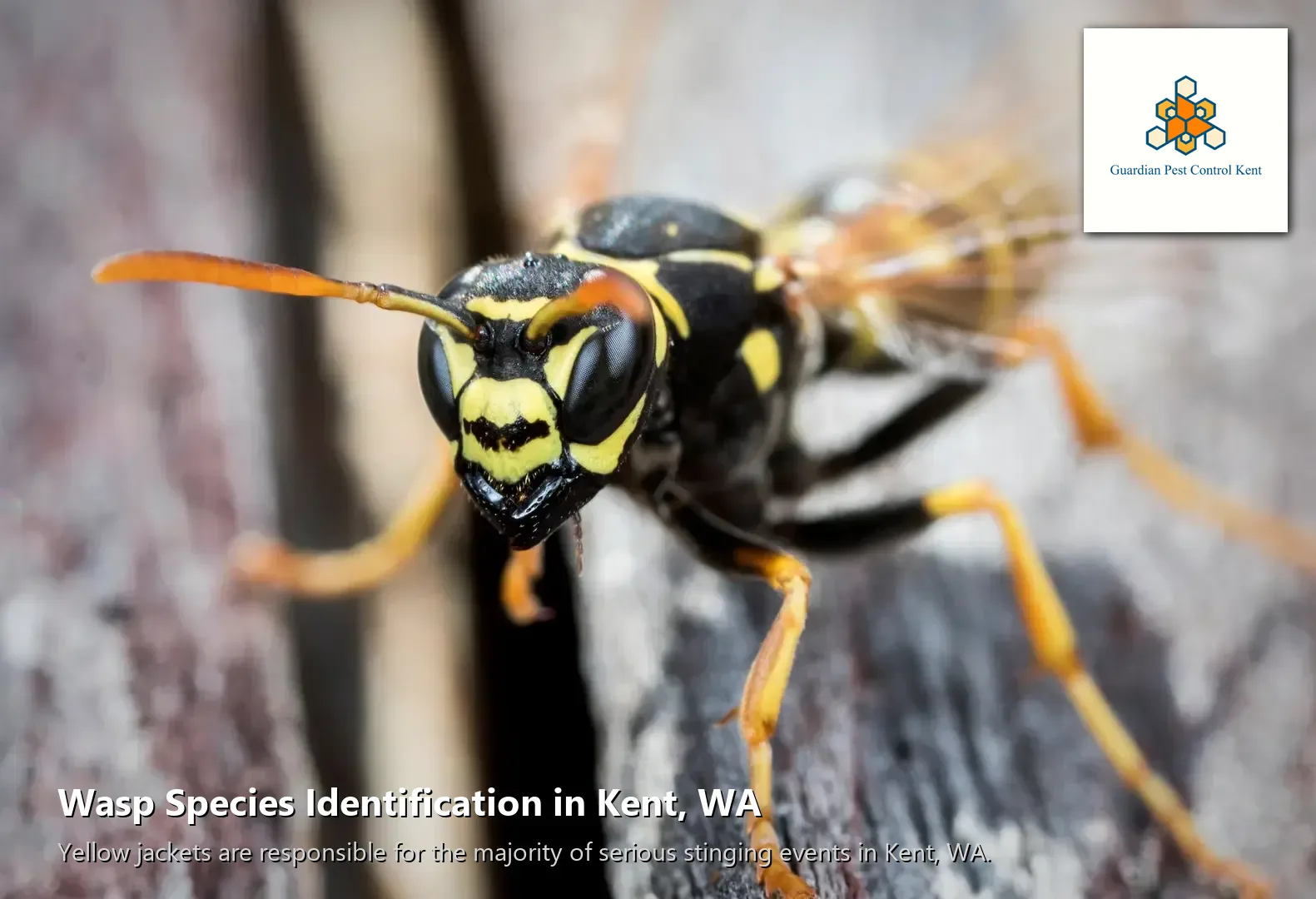
Wasp Species Identification in Kent, WA
| Species | Nest type | Nest location | Aggression level | DIY safe? |
|---|---|---|---|---|
| Yellow jacket (Vespula spp.) | Paper nest in enclosed void | Underground, wall voids, roof eaves | Very high (September) | No - ground and wall nests |
| Bald-faced hornet (D. maculata) | Large grey paper football, exposed | Tree branches, eaves, utility poles | Very high within 3 feet | No |
| Paper wasp (Polistes spp.) | Open comb, no outer shell | Under eaves, in door frames, on fences | Low–moderate | Yes, if nest < tennis ball |
| Mud dauber (Sceliphron spp.) | Mud tubes on walls or ceilings | Garage walls, porch ceilings, sheds | Very low - rarely stings | Yes - scrape and seal |
Yellow jackets are responsible for the majority of serious stinging events in Kent, WA. Their enclosed paper nests - built underground, inside wall voids, or in crawl spaces - conceal the full colony from view. A nest entrance hole 1 inch wide may lead to a nest containing 5,000 workers 18 inches below grade. The enclosed nest structure means a single aerosol application to the entrance hole does not disperse through the colony; it irritates the entrance-guard workers and triggers an immediate defensive mass attack.
Step-by-Step: How to Remove a Small Paper Wasp Nest (DIY)
Confirm the species and nest size
Paper wasp nests consist of a single open honeycomb layer with visible cells - no outer paper shell. Workers are slim with a distinctly narrow waist and are 3/4–1 inch long. If the nest has a visible outer shell, or if workers are entering and exiting a gap rather than resting on an exposed comb, do not proceed. Call Guardian Pest Control at (304) 684-6328.
Prepare equipment
Required: a wasp-freeze aerosol or jet-spray insecticide with a minimum 10-foot range, long-sleeved clothing (no exposed skin), gloves, closed-toe shoes, safety glasses, and a plastic bag. Do this preparation indoors before approaching the nest. Have a clear, unobstructed retreat path planned - never treat with a ladder or restricted movement behind you.
Treat at dusk (30–60 minutes after sunset)
All workers return to the nest at dusk. Air temperatures drop below 60°F in Kent evenings from September through May, further slowing wasp reaction time. Approach from the side - not from directly below the nest - and apply the spray directly onto the comb from maximum aerosol range. Apply for 3–5 seconds. Retreat immediately to at least 30 feet. Do not linger to assess results.
Wait 48 hours before nest removal
Do not approach the nest for 48 hours after treatment. Surviving workers that were off-nest during the treatment return and are highly aggressive for 24–48 hours. After two full days with no visible worker activity, confirm the nest is inactive by observing from a distance for 10 minutes at midday - the period of maximum activity if the colony were alive.
Remove and seal
Place a plastic bag over the dead nest and detach it from the attachment point with a flat tool. Seal the bag immediately. Wash the attachment surface with soapy water - wasp pheromones on the surface attract future queens to the same location if not cleaned. Seal any structural gap near the nest site with silicone caulk to prevent recolonisation.
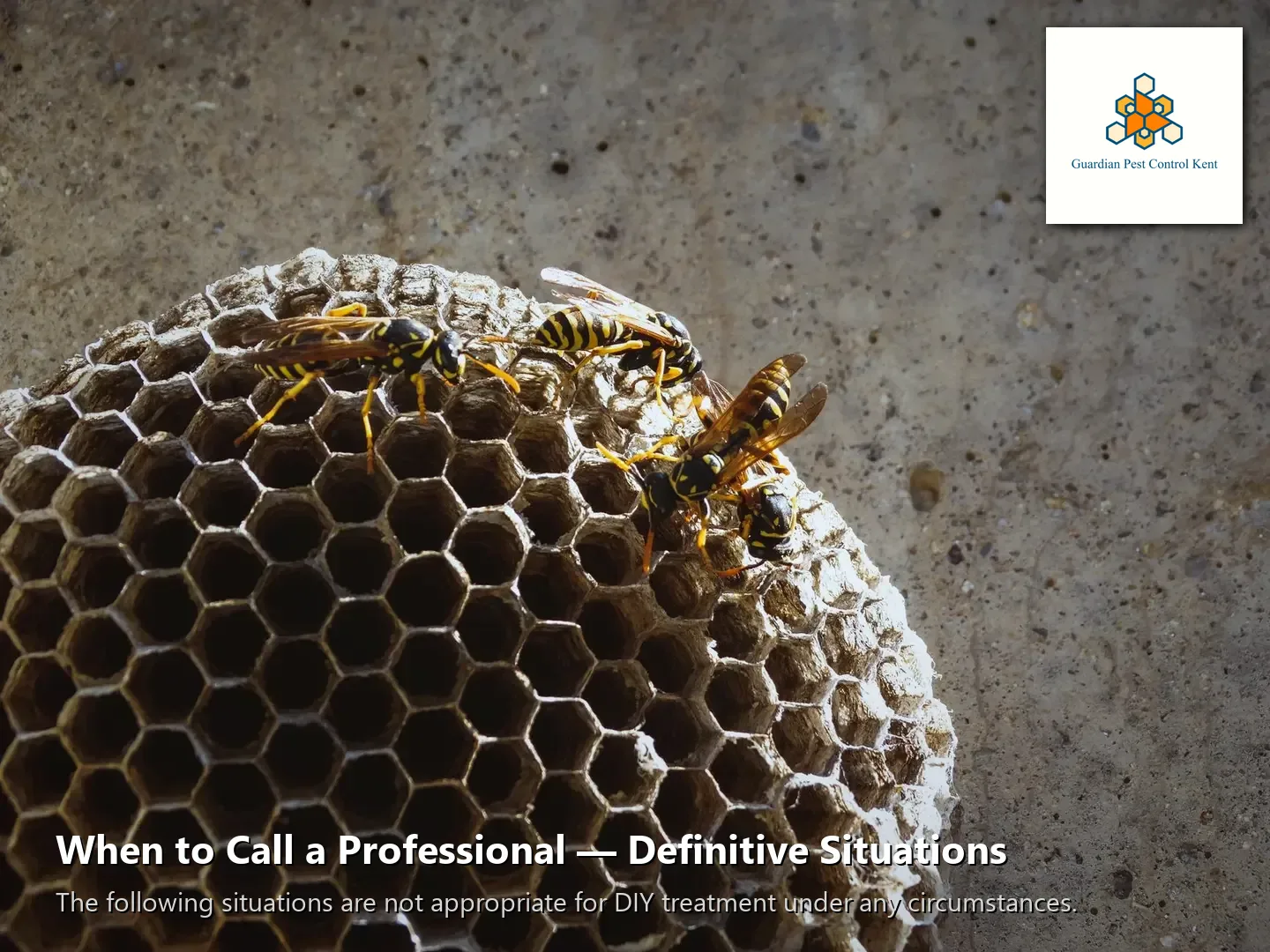
When to Call a Professional - Definitive Situations
The following situations are not appropriate for DIY treatment under any circumstances:
- Underground yellow jacket colony - a disturbed underground nest deploys the entire colony simultaneously. The entrance hole provides no indication of colony size. Professional treatment uses dust insecticide injected into the entrance after dark, killing the colony without opening the nest.
- Wall void colony - aerosols applied to a wall void entrance disperse the colony into the interior of the home through gaps in the wall structure. A specialist accesses the colony from outside with insecticide dust or foam, containing the response to the exterior.
- Bald-faced hornet nest of any size - bald-faced hornets defend a 3-foot perimeter aggressively and can sting through standard clothing. Nests of 500–700 workers by August present serious risk from any approach.
- Nest in or attached to HVAC, electrical panel, or gas meter - treatment chemicals must be kept away from electrical components and gas fittings. A licensed specialist uses the correct application method for the location.
- Any nest where a household member is allergic to venom - anaphylaxis from a single sting is possible without prior sensitisation; a household member with a known allergy requires professional treatment and should not be present during the service.
- Any nest larger than a softball in late August or September - colonies at late-season maximum population are the most defensive and the most difficult to eliminate with a single treatment.
Wasp Prevention for Kent, WA Homes
Spring prevention (April–May) - the highest-leverage window
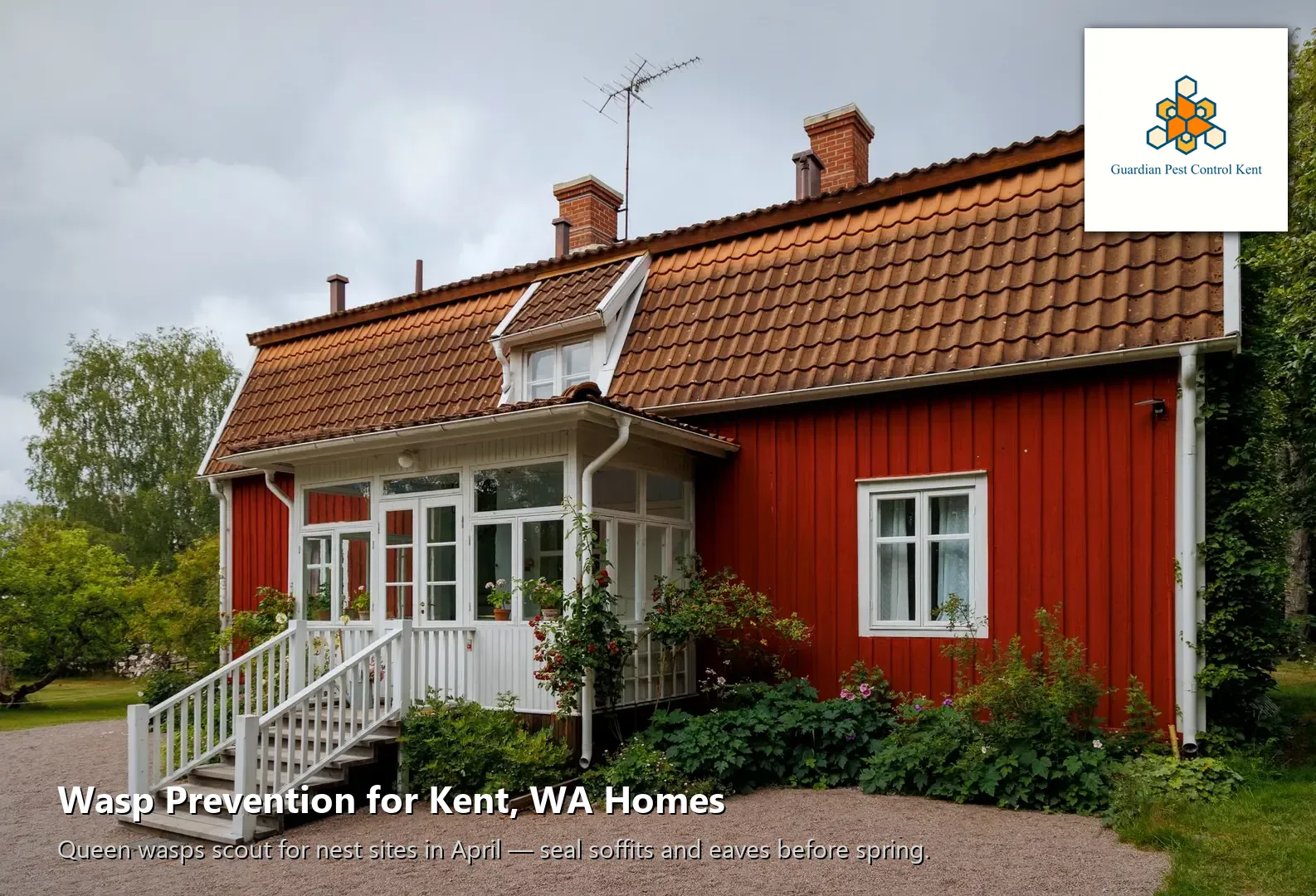
Queen wasps scout for nest sites in April. Treating eaves, soffits, fence rails, and other preferred nest attachment points with a residual insecticide in April kills queens before they establish colonies. One application in April prevents 3,000–5,000 workers from developing by September. This is the most cost-effective point in the wasp control cycle.
Sealing nest sites
- Seal all gaps in siding, soffit, and fascia boards larger than 1/4 inch - yellow jackets enter wall voids through very small openings.
- Install mesh over vents and exhaust openings that are not already screened.
- Fill the gap between the foundation and the wood sill plate - yellow jackets and ground nesters use this gap to access crawl spaces.
Removing food attractants in summer
- Secure garbage bins with tight-fitting lids - yellow jackets scavenge protein from kitchen waste during late summer when colony food pressure peaks.
- Clean up fallen fruit from trees daily - fermenting fruit is a primary yellow jacket attractant in Kent residential areas.
- Avoid leaving pet food outdoors - sweet and protein-rich pet foods attract all wasp species.
- Keep outdoor dining areas clean - residues from sugary drinks and barbecue drippings attract yellow jackets within minutes.
Frequently Asked Questions
When is the best time to treat a wasp nest in Kent, WA?
Treat wasp nests at dusk or dawn when all workers have returned to the nest and temperatures are lowest - wasps are slower and less reactive in cool conditions. In Kent, WA, the safest treatment window is 30–60 minutes after sunset. Never treat during daylight hours when workers are actively foraging and colony defence is at maximum.
How do I know if wasps are in my wall in Kent, WA?
Signs of a wall void wasp colony include: steady wasp traffic entering and exiting a gap in the siding or soffit; a buzzing or papery rustling sound inside the wall when the exterior is quiet; and small chewed paper dust falling from a gap. Wall void colonies in Kent homes reach 5,000+ workers by September and require professional treatment - DIY aerosols applied to a wall void opening disperse the colony into the interior of the home.
Are yellow jackets and wasps the same insect in Washington State?
No. Yellow jackets are a specific group of wasps (genus Vespula and Dolichovespula). Washington State hosts five yellow jacket species. All yellow jacket species are wasps, but not all wasps are yellow jackets. The bald-faced hornet and paper wasps are also wasps but behave and nest differently from yellow jackets.
What happens if I disturb a yellow jacket nest in the ground?
Disturbing a yellow jacket ground nest triggers an immediate mass defensive attack. A mature colony in September contains 3,000–5,000 workers. Each worker can sting multiple times. 500 or more stings is potentially lethal to adults without anaphylaxis. Do not attempt to treat an underground yellow jacket colony without full protective equipment.
Will wasps come back to the same nest next year in Kent, WA?
No. Wasp colonies die completely in autumn - the colony queen, workers, and larvae do not survive winter in western Washington. However, new queens that overwintered in bark, soil, or wall voids will seek nest sites in the same areas where previous nests succeeded. Removing the old nest and treating eaves in spring prevents the same location from being recolonised.
How much does professional wasp nest removal cost in Kent, WA?
Professional wasp nest removal in Kent, WA typically costs $100–$250 for a single exposed nest. Underground yellow jacket colony treatment ranges $150–$350 depending on depth and access. Wall void colonies requiring access panel installation are priced after inspection, typically $250–$500+. Guardian Pest Control provides emergency same-day wasp response Monday–Saturday - call (304) 684-6328 for pricing.
Is it illegal to remove a wasp nest in Washington State?
Removing a wasp nest from your own property is legal in Washington State without any permit. WSDA licensing is required for pest control companies that apply pesticides commercially, but homeowners may treat their own property. However, professional treatment is recommended for any colony larger than a softball.
Summary
Wasp removal in Kent, WA is a species-specific task. Small open paper wasp nests can be treated safely at dusk with standard aerosol products. Underground yellow jacket colonies, wall void nests, and large exposed nests require WSDA-licensed professional treatment with appropriate protective equipment and targeted application methods. The best time to address wasps in Kent is June - before the colony reaches its late-summer maximum size.
Guardian Pest Control provides WSDA-licensed wasp and hornet removal in Kent, WA with same-day emergency response available Monday–Saturday. For underground colonies, wall void nests, or any nest where size or location makes DIY unsafe, call (304) 684-6328 or book emergency pest control online.
Sources
- WSU Extension - Yellowjackets and Other Social Wasps: extension.wsu.edu
- EPA - Wasp and Bee Control: epa.gov/safepestcontrol
- Washington State Department of Agriculture (WSDA): agr.wa.gov